Dating App Success Rates
When people Google dating app success rates, they’re usually asking a simple question: do these apps actually lead to dates, relationships and long-term partners?
The honest answer is that there is no single industry-wide success rate. Different sources measure “success” in different ways: some track how many people use dating apps, others look at how many couples met online, and others focus on whether users felt the experience was positive.
That means the clearest public picture comes from relationship outcomes and user experience rather than from one neat conversion percentage.
Dating apps are still firmly mainstream
In the UK, dating apps are still firmly mainstream, even if growth has cooled.
Approx. 4.9 million adults, or roughly one in ten, used an online dating service in the previous year. That matters because any discussion of success rates starts with scale: a platform needs enough active users to give people a realistic pool of matches.
US survey data shows just how normal online dating has become. Pew Research Center found that 30% of adults have ever used a dating site or app, while 9% had used one in the previous year.
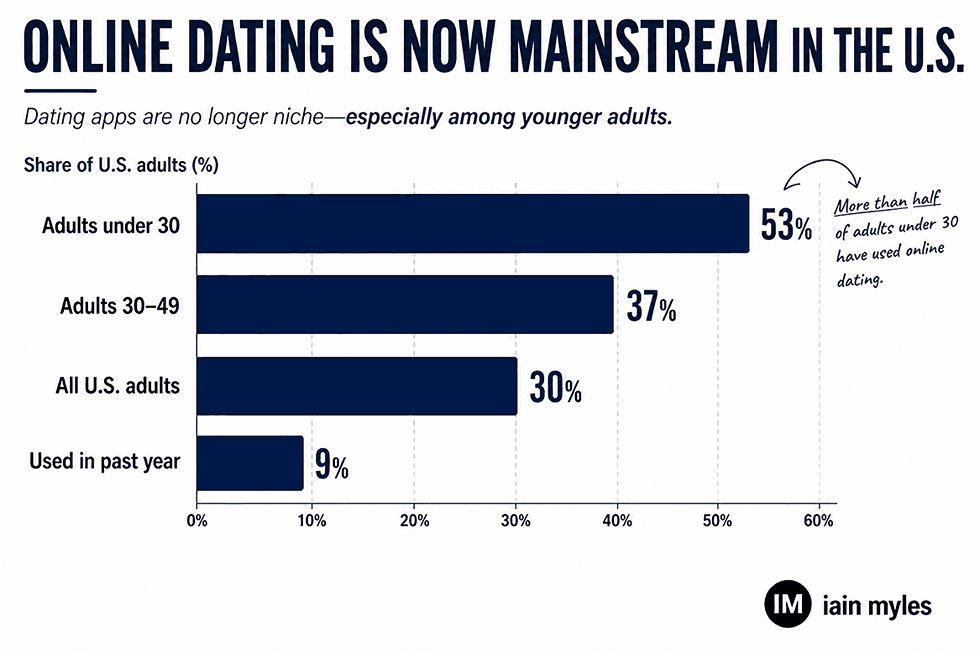
How mainstream is online dating today?
Among adults under 30, usage is much higher, with 53% saying they have used online dating, compared with 37% of those aged 30 to 49. In other words, dating apps are no longer a niche corner of the internet; for younger adults especially, they are part of the standard dating market.
Source: Pew Research Center
The strongest sign of success: real relationships
So what is the strongest statistic for real-world success? One of the best available is this: one in ten partnered adults in the US said they met their current spouse or partner on a dating site or app.
Among partnered adults under 30, that rises to one in five, and among partnered LGB adults it reaches 24%. That is not the same as saying one in ten users finds a partner, but it does show that dating apps are producing a meaningful share of established relationships.
Longer-term academic research backs that up. Stanford sociologist Michael Rosenfeld found that by 2017, about 39% of heterosexual couples in the US reported meeting their partner online, up from 22% in 2009.
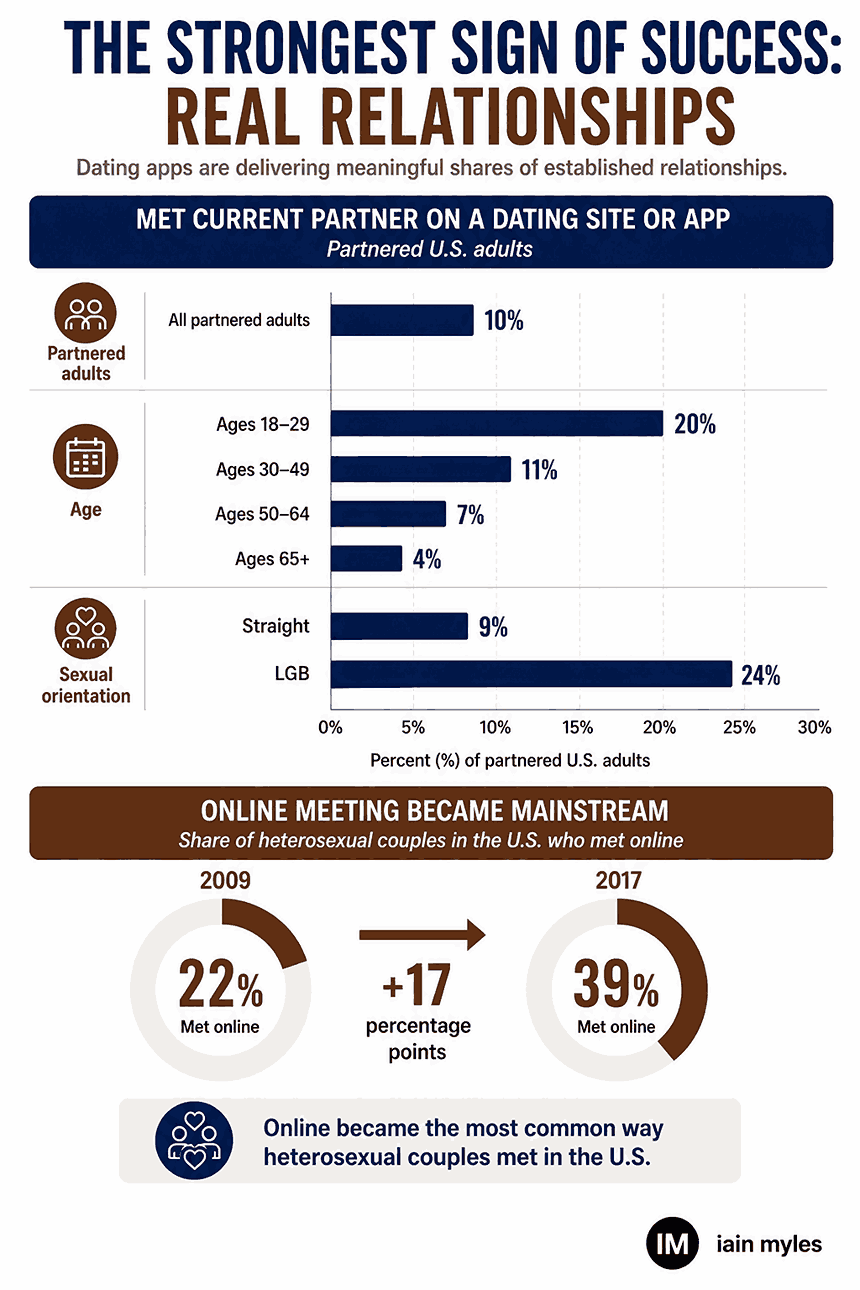
What is the strongest sign of success?
His research also found that meeting online had overtaken meeting through friends, making it the most common route for heterosexual couples to connect. Importantly, the study summary said relationship success did not depend on whether people met online or offline.
That does not mean every swipe leads somewhere worthwhile, but it does suggest that relationships formed through apps are not automatically weaker or less serious.
Source: Pew Research Center, Stanford University
What users are actually looking for
Another way to assess dating app success is to look at user intent. Pew found that among people who had used a dating site or app in the previous year, 44% said meeting a long-term partner was a major reason they used these platforms, while 40% said the same about casual dating.
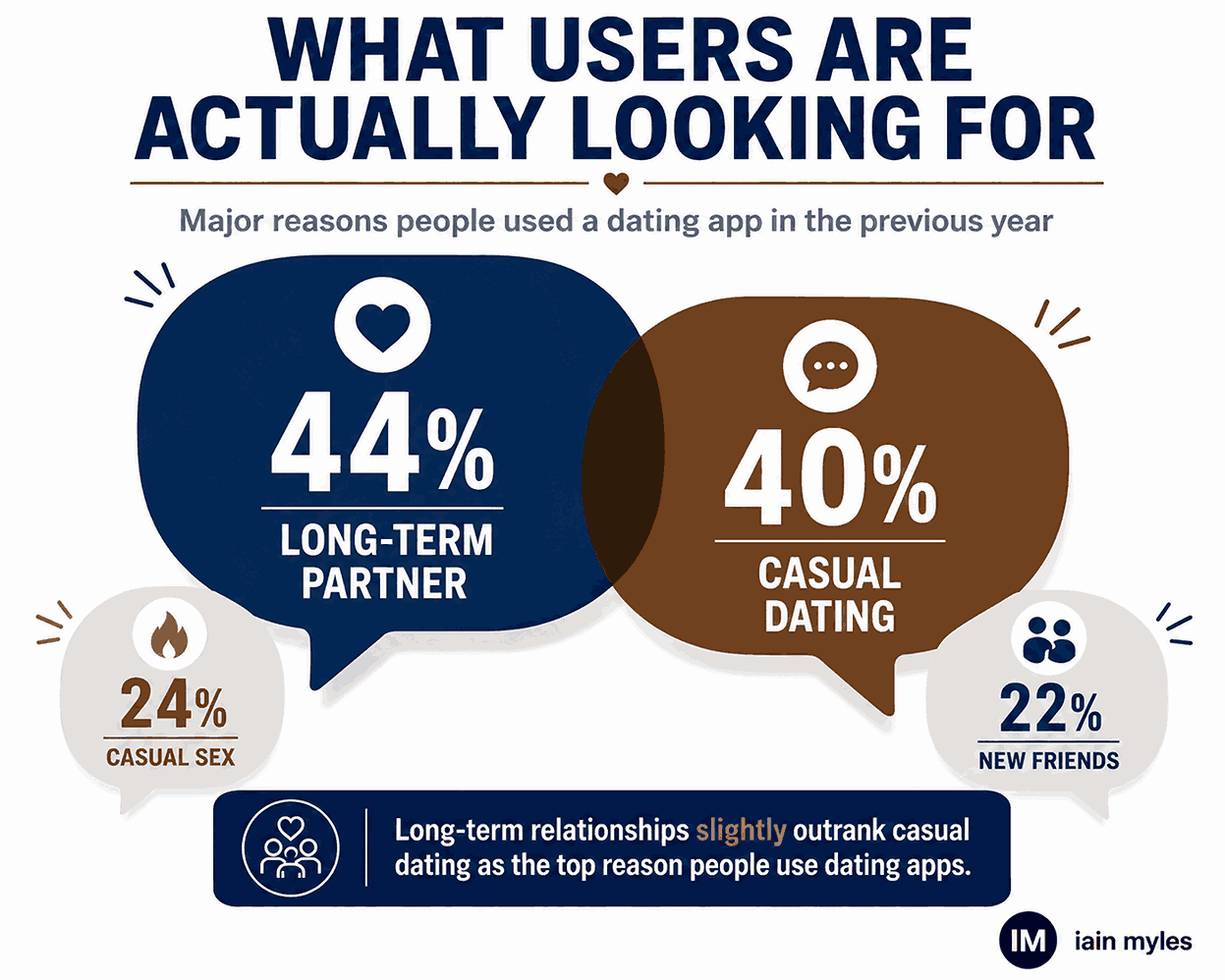
Why do people use dating apps?
That matters because it shows that the audience is not there for one single purpose. A large share are actively looking for something serious, which helps explain why online dating now feeds into so many real relationships.
Source: Pew Research Center
Success in outcomes, mixed results in experience
User sentiment, however, is more mixed and that is where the “success rate” conversation gets messy. Pew found that 53% of people who had ever used online dating described their experiences as very or somewhat positive, compared with 46% who said they were negative.
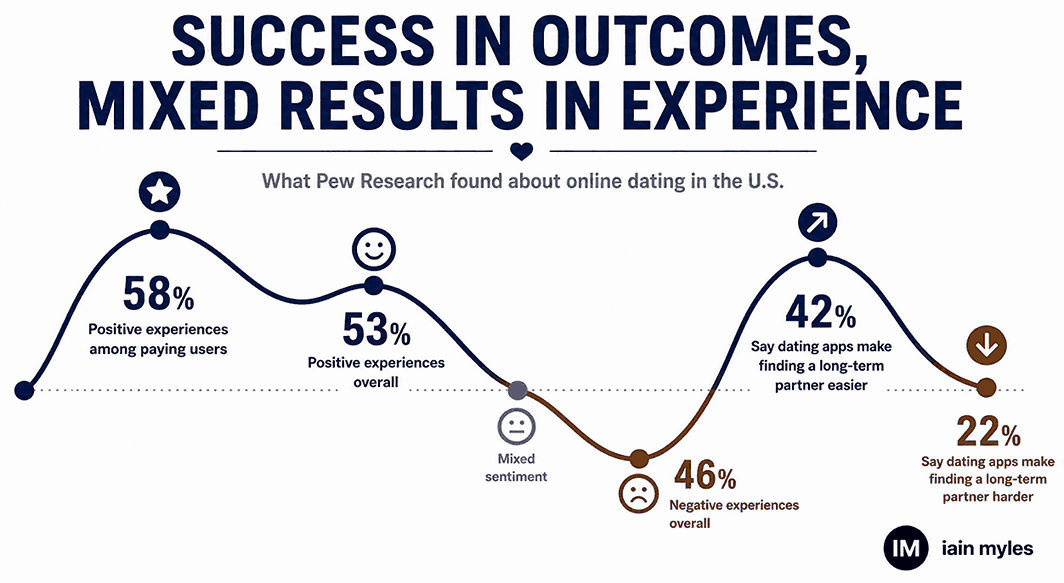
What is the success rate on dating apps?
The same research found that 42% of US adults believe dating apps have made finding a long-term partner at least a little easier, while 22% think they have made it harder. So the data points to a modest overall benefit, but not an overwhelming one.
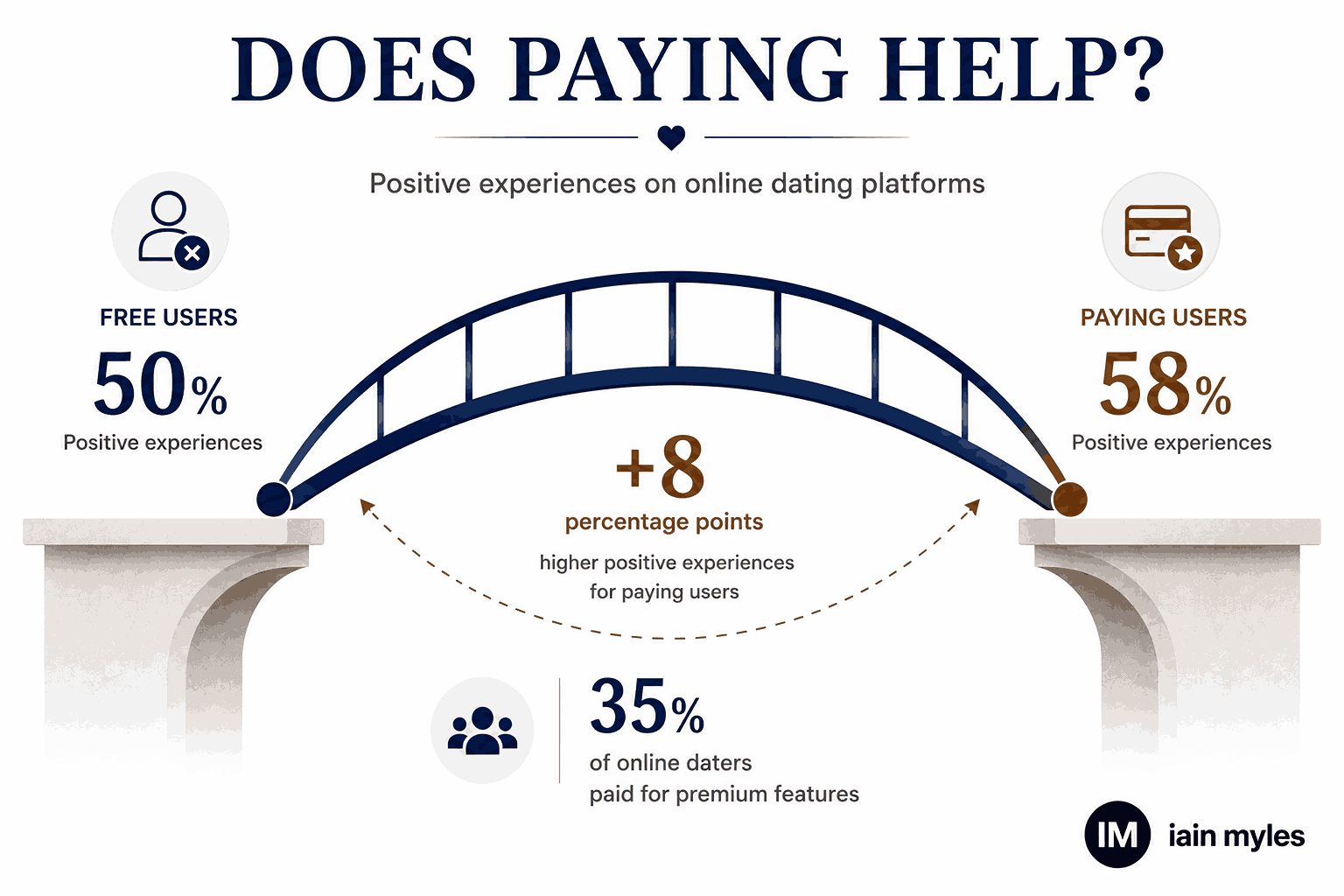
Paying for premium features may improve the experience, although it does not create a guaranteed result. Roughly 35% of people who had used online dating said they had paid for a platform or extra features.
Does paying for dating apps help?
Among paying users, 58% said their experiences had been positive, compared with 50% of users who had never paid. That suggests paid tiers may help some users with visibility or messaging, but the uplift looks noticeable rather than dramatic.
Source: Pew Research Center 1, Pew Research Center 2
Why many users still find dating apps frustrating
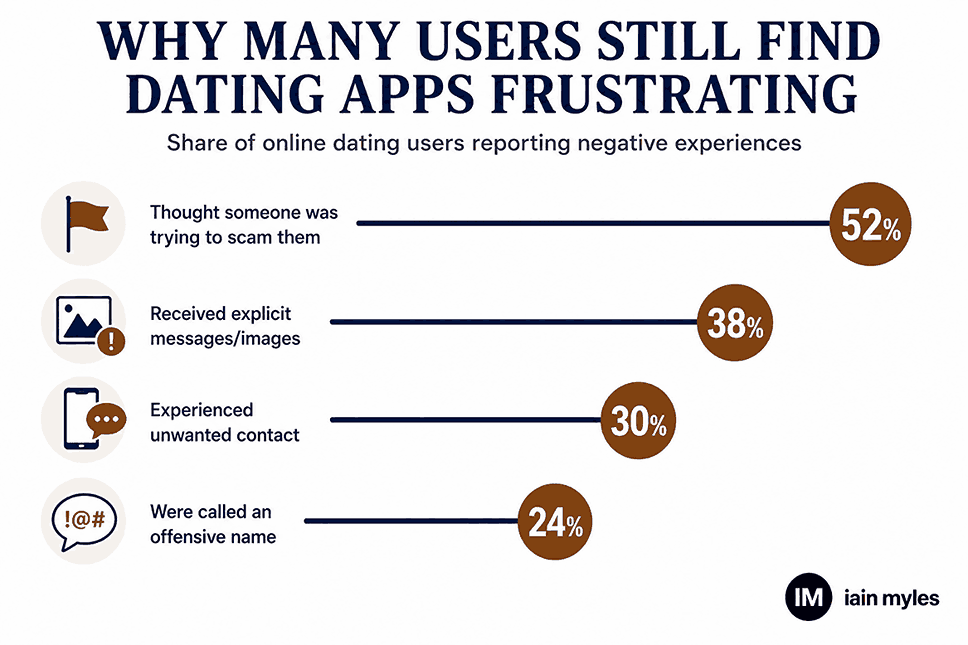
The reason dating apps can feel less successful than the headline relationship numbers suggest is that the journey is often frustrating. Pew found that 52% of online dating users had come across someone they thought was trying to scam them.
Why many users still find dating apps frustrating
Among all users, 38% had received unsolicited sexually explicit messages or images, 30% had experienced continued unwanted contact, and 24% had been called an offensive name. Younger women reported especially high levels of unwanted behaviour.
These problems do not cancel out the success stories, but they do explain why many users experience dating apps as high-effort spaces with uneven rewards.
Source: Pew Research Center
Final takeaway
So do dating apps work? The statistics suggest yes, but with an important caveat. If success means reach, they are clearly successful: millions of adults use them, and usage is especially high among younger people.
If success means forming genuine relationships, the answer is also yes: a notable share of partnered adults met online, and online meeting has become the leading route for many couples. But if success means a smooth, enjoyable and consistently safe experience, the answer is far more qualified.
Satisfaction is only slightly net positive, and issues such as scams, harassment and unwanted contact are still common.
The clearest takeaway is that there is no single dating app success rate statistic that tells the whole story. The most credible public picture is broader: one in ten partnered adults say they met their current partner on a dating app or site, one in five partnered adults under 30 say the same, and nearly four in ten heterosexual couples in the US were meeting online by 2017.
Those figures make one thing clear: dating apps are no longer just a digital sideshow. They are now a mainstream route into real relationships.