Gen Z Sex Statistics
The strongest published data on Gen Z doesn’t support the idea that this is an unusually sex-obsessed generation. If anything, the clearest evidence points the other way.
The best available numbers suggest that sexual inactivity, delayed first sex and lower levels of sexual experience are more common amongst Gen Z than the clichés imply, especially in the teenage years where the data is strongest.
Fewer Gen Z teenagers are having sex
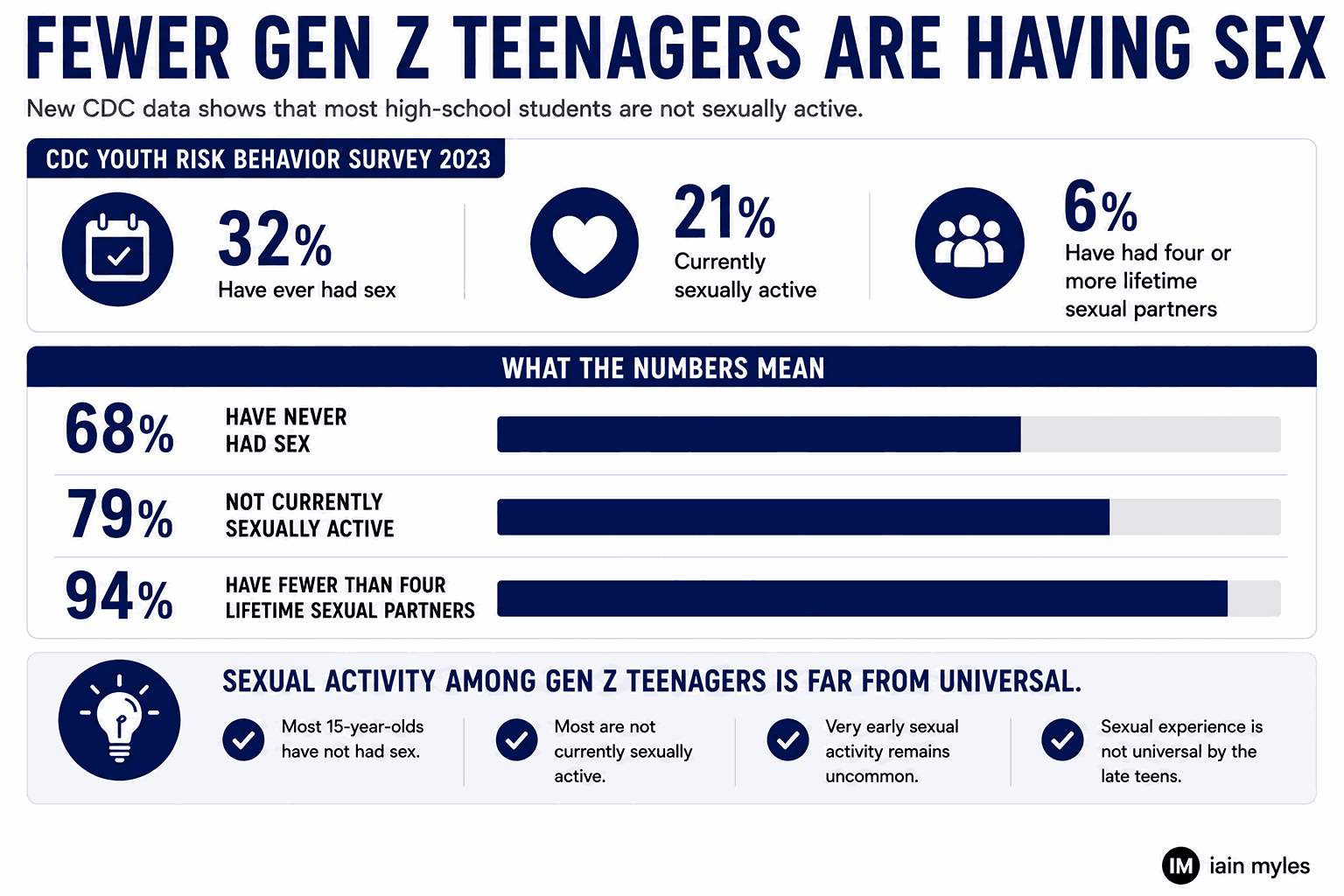
Amongst high-school students, the pattern is especially clear. The CDC’s 2023 Youth Risk Behavior Survey found that 32% had ever had sex, 21% were currently sexually active, and 6% had had four or more lifetime sexual partners.
Are fewer Gen Z teenagers haing sex?
Read another way, that means 68% had never had sex at all, while roughly four in five were not currently sexually active by the survey’s definition. That is a long way from the idea that sexual activity is near-universal among Gen Z teenagers (while there’s no universal way to calculate a precise virginity rate, figures like these are often used as a rough proxy for it).
Source: YRBS 2013-2023, CDC
The long-term trend points in the same direction
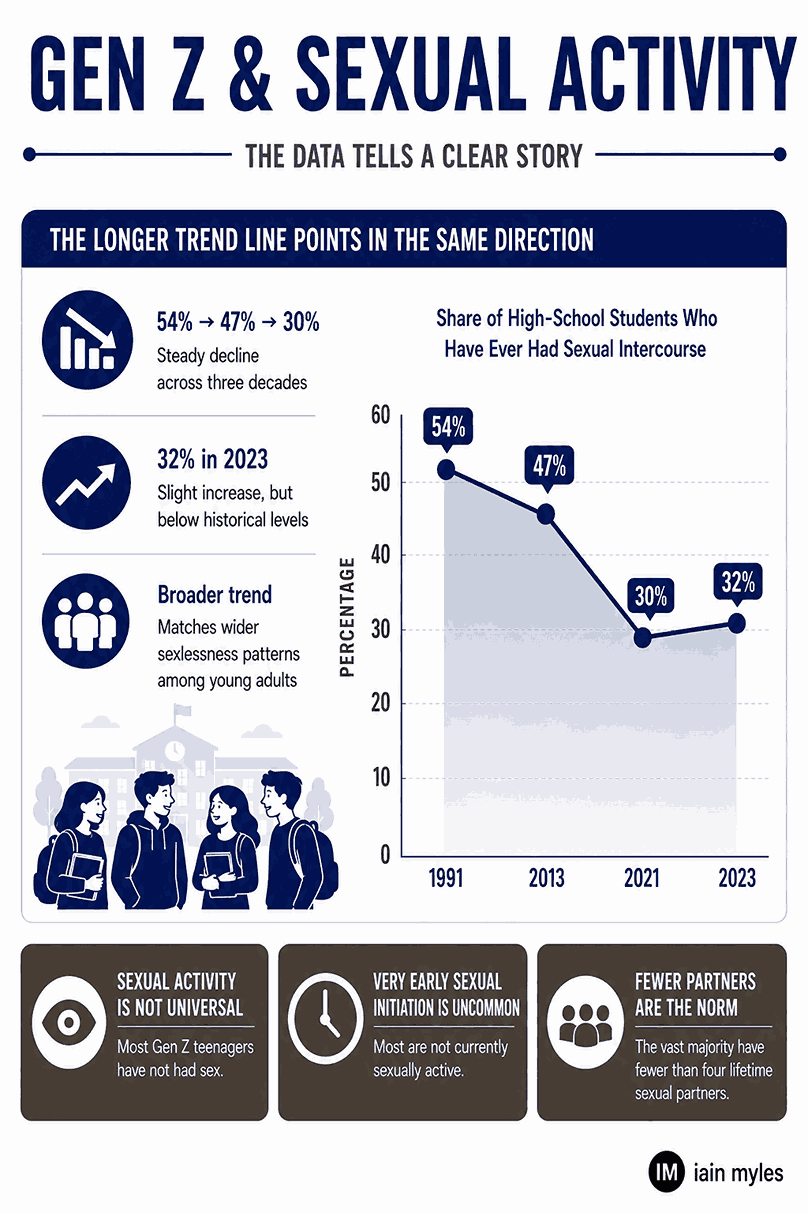
The longer trend line points in the same direction. Federal child wellbeing data based on the same national survey shows that the share of high-school students who had ever had sexual intercourse fell from 54% in 1991 to 47% in 2013, then down to 30% in 2021.
What do the data reveal about Gen Z sexual activity?
The 2023 figure of 32% is slightly higher than 2021, but the broader story is still one of long-term decline rather than a generational surge in sexual activity. This aligns with wider sexlessness trends observed across younger adults in other datasets.
Source: Forum
Delayed first sex appears increasingly normal
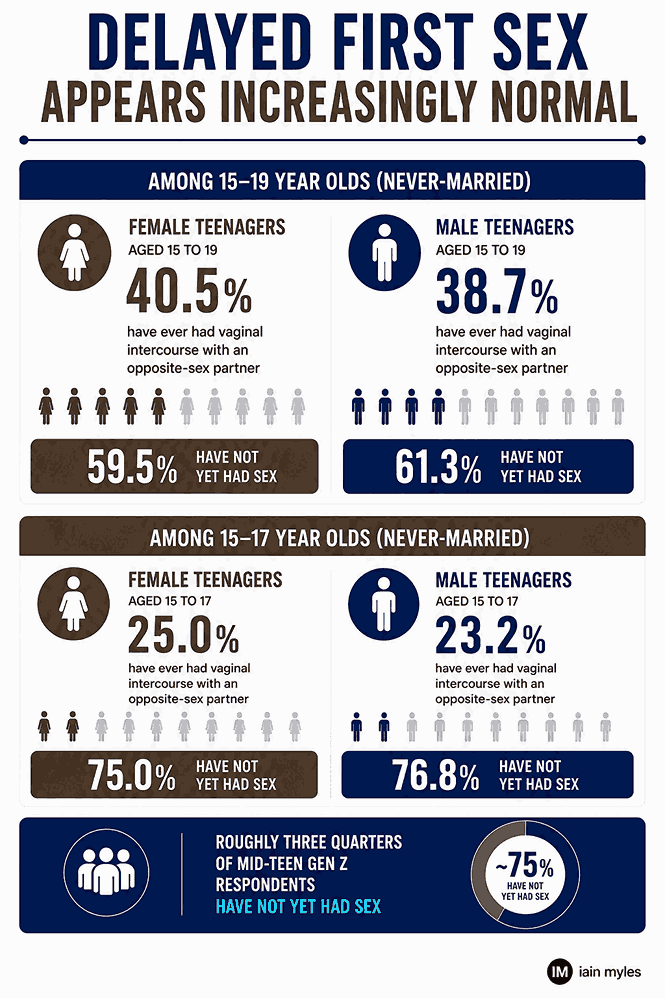
Another useful measure comes from the National Survey of Family Growth. In 2015–2019, 40.5% of never-married female teenagers and 38.7% of never-married male teenagers aged 15 to 19 said they had ever had vaginal intercourse with an opposite-sex partner.
Is delayed first sex becoming increasingly normal?
Amongst 15- to 17-year-olds, the figures were just 25.0% for girls and 23.2% for boys. On that measure, roughly three quarters of mid-teen Gen Z respondents had not yet had sex. That makes delayed sexual debut look fairly normal, not exceptional.
Source: NCHS reports, CDC
Lower sexual activity does not mean lower risk
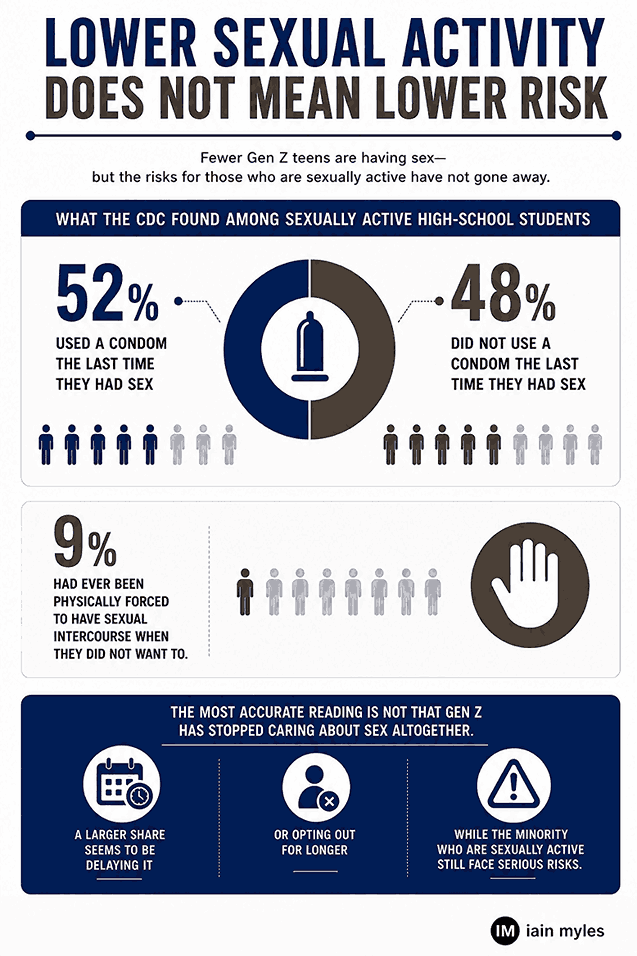
None of this means sexual risk has disappeared. The same CDC report found that, amongst sexually active high-school students, 52% used a condom the last time they had sex, meaning 48% did not. It also found that 9% of high-school students had ever been physically forced to have sexual intercourse when they did not want to.
Does lower sexual activity mean lower risk?
So the most accurate reading is not that Gen Z has stopped caring about sex altogether. It is that a larger share seems to be delaying it or opting out for longer, while the minority who are sexually active still face serious risks.
What the data suggests overall
The cleanest headline, then, is this: the published evidence tilts towards Gen Z being more sexually inactive, not less. Fewer teenagers are having sex, fewer are currently sexually active, and delayed first sex appears to be common rather than unusual.
That may not fit the loudest online narrative, but it fits the data better.
Disclaimer: This article is for informational purposes only and summarises publicly available statistics. It does not promote or encourage sexual activity amongst young people. Sexual activity involving minors is subject to local laws and regulations, which vary by country and readers should be aware of and comply with the laws applicable in their jurisdiction.